

Save and export
Saving
You can save changes to your template at any time. To do so, click the Save button in the top bar of the workspace.

Export
To export, click the Export button in the top bar. A window with three tabs will open: File, Integration, and Share.

File tab
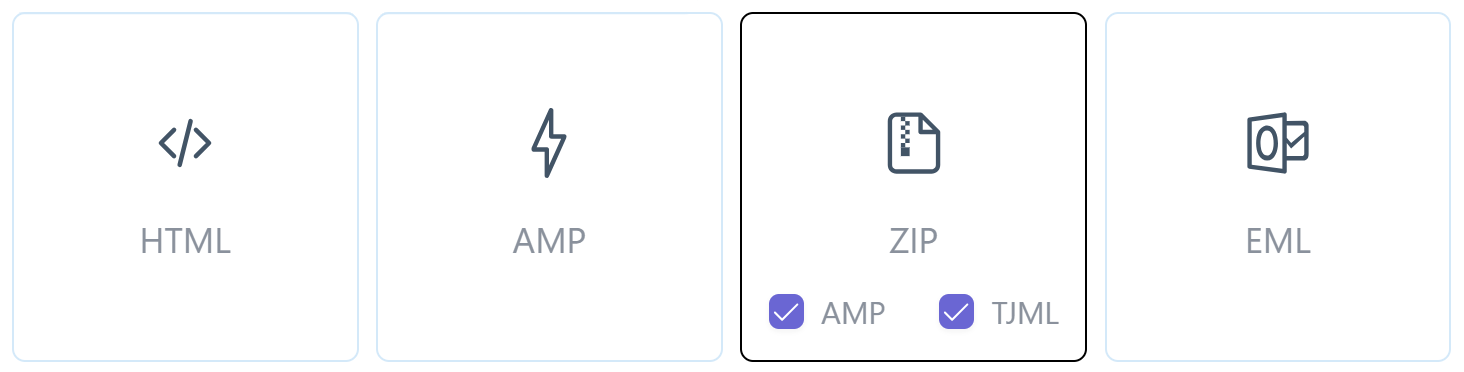
On the File tab, you can download the finished email in one of the formats:
- HTML — ready-made HTML code for the email;
- AMP — version of the email with dynamic elements;
- ZIP — archive with the HTML file of the email and all images; AMP and TJML versions of the email can be added to the archive;
- EML — email file for previewing in email clients.
You can also select an image storage (Pixcraft by default), enable the Compress code option to reduce the size of the final file, as well as configure statistics collection:
- Opening stats — allows tracking email opens, including separately for AMP and HTML. Statistics will be available in the analytics section;
- Time stats — allows tracking email reading time. Statistics will be available in the analytics section.
Integration tab
On the Integration tab, you can export the template directly to an ESP platform.

Select the desired platform from the list and click Export. The first time you export, you will need to specify connection parameters (title, spaces, domain, API token, and others). In the future, it will be sufficient to simply select the desired integration.
Available platforms:
















Share tab
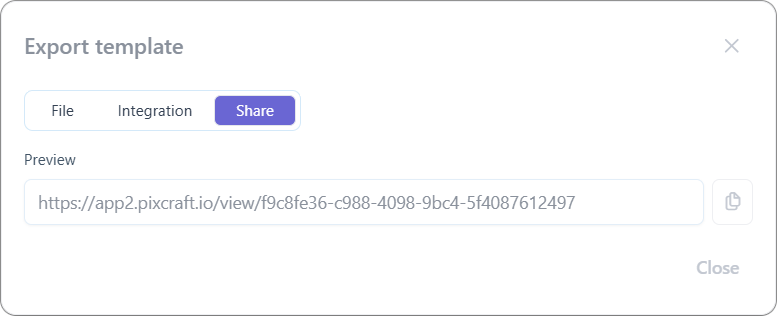
On the Share tab, a public link to the template preview is created. Send it to a colleague or a client: the link opens a preview page where the template can only be viewed — editing is not possible.
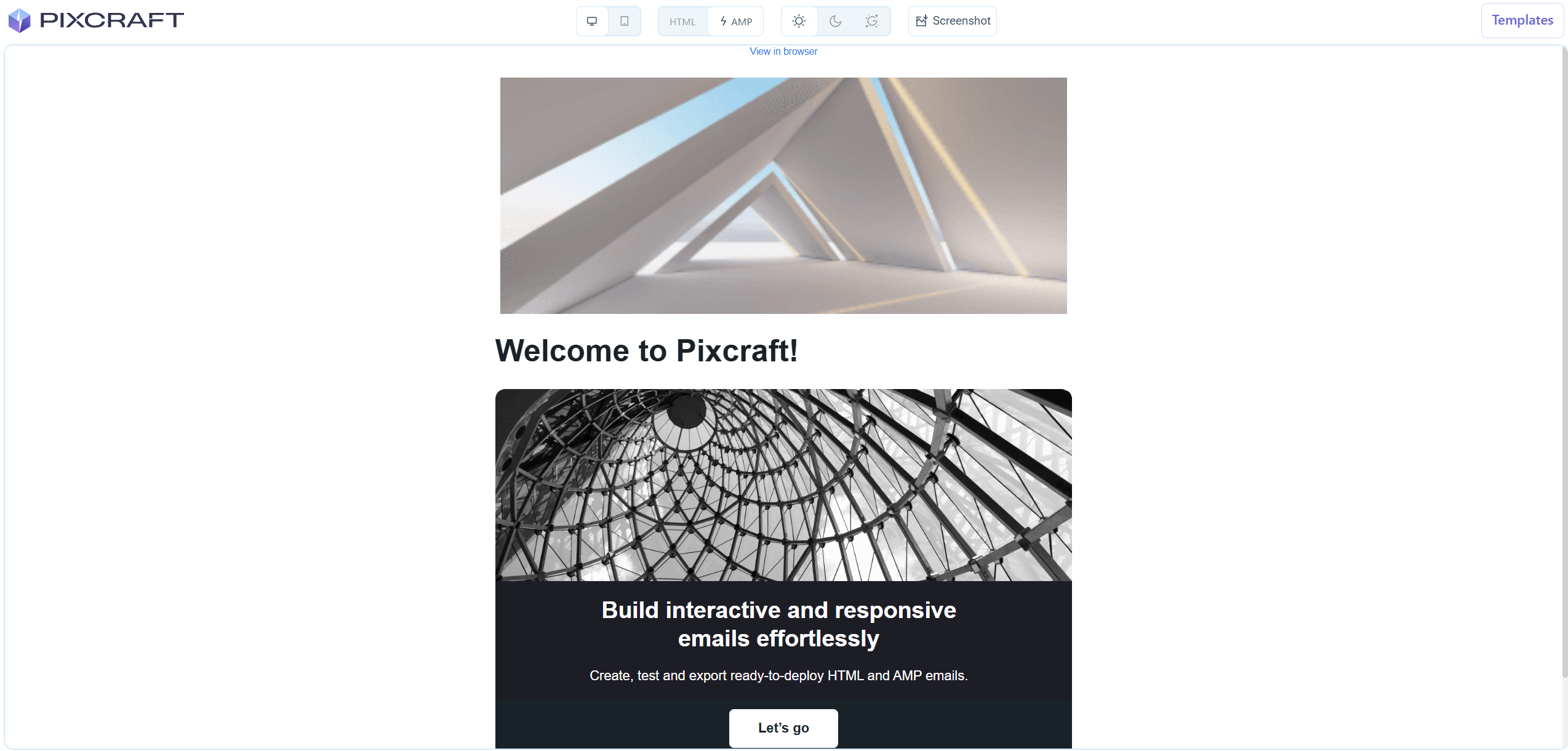
The preview page has switches:
- desktop and mobile versions — how the email looks on a computer and on a smartphone;
- HTML and AMP — which version of the email opens;
- light and dark themes — how the email looks in the dark styling of an email client.
This is what the email looks like when opened via the link:
You can also see how the email will look to the recipient without a link — in the built-in preview.